

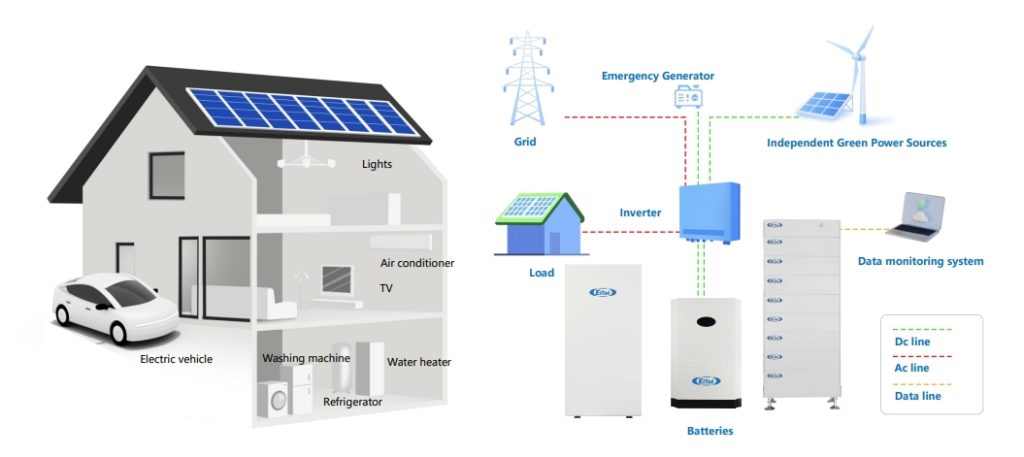
The way homeowners think about electricity is changing fast. With rising utility bills, aging grid infrastructure, and growing climate awareness, more households are turning to solar batteries as a long-term solution rather than just a backup plan. The global residential energy storage market is poised to grow from around $6 billion in 2023 to over $25 billion by 2030, according to Wood Mackenzie’s Energy Storage Monitor. At the center of this shift is battery technology that is becoming smarter, cheaper, and more reliable every year.
Rise of Solar Batteries in Residential Energy Storage
A decade ago, storing solar energy at home was expensive and impractical for most families. That story has flipped dramatically. The cost of solar batteries has dropped by more than 90% since 2010, largely driven by advances in lithium-ion chemistry and scaled manufacturing, as tracked by BloombergNEF’s annual battery price survey. Today, residential energy storage systems are not just affordable; they are increasingly the standard complement to any new solar installation.
In the United States alone, the Solar Energy Industries Association (SEIA) reported that battery attachment rates for new residential solar systems climbed past 20% in 2023 and continue to accelerate. Pair that with generous federal incentives under the Inflation Reduction Act, which allows homeowners to claim a 30% tax credit on solar battery installations, and the calculus for going solar plus storage has never been cleaner.
States like California, Texas, and Hawaii are at the forefront of this effort, motivated in part by grid reliability concerns and in part by time-of-use electricity pricing that rewards households for drawing on stored energy during peak-rate periods. The rise of solar batteries in the residential space is no longer a trend; it is a structural shift in how homes consume and manage energy.
How Solar Batteries Enable Energy Independence for Homes
Energy independence with solar batteries is one of the most compelling promises in the residential market today, and it is becoming increasingly achievable. A well-sized home battery storage system, paired with a rooftop solar array, can meet most of a household’s energy needs, reducing or even eliminating dependence on the utility grid.
For homeowners in rural areas or regions prone to outages, off-grid solar power systems represent a genuine path to self-sufficiency. When sunlight is abundant, panels generate electricity that charges the battery bank. After dark, or during cloudy stretches, the home draws power from stored reserves rather than the grid. Some systems, like the Tesla Powerwall or Enphase IQ Battery, are purpose-built for this seamless transition.
What makes this particularly powerful is the combination of solar energy storage solutions with smart energy management software. Modern systems track consumption patterns, forecast solar generation based on weather data, and automatically decide when to store, use, or export energy. That intelligence is what transforms a simple battery into a genuine tool for energy independence with solar batteries.
A solar battery backup for homes offers far more than convenience for families concerned about power outages, especially during extreme weather events. It provides continuity for medical devices, food preservation, communication, and lighting when the grid goes dark.
The Role of Solar Battery Storage in Modern Energy Systems
The role of solar batteries extends well beyond individual homes. At the grid level, widespread residential adoption of home battery storage creates what utility planners call “distributed energy resources,” a network of small-scale storage units that collectively smooth out grid demand spikes and support grid operators during peak load events.
Virtual power plant (VPP) programs are a growing example of these benefits. In a VPP, homeowners agree to let their utility briefly draw from their solar energy storage solutions during grid emergencies in exchange for bill credits. California’s CPUC has approved several such programs, and Australia’s market operator has run successful VPP pilots involving thousands of homes. This is not science fiction; it is happening now.
Modern smart solar energy systems increasingly integrate with demand response programs, EV charging stations, and home automation platforms. The battery becomes the hub of an intelligent energy ecosystem, not just a passive backup device. For more on how safety is being integrated into these systems, the work happening in battery research and integration reflects just how seriously the industry is taking both performance and protection.
Benefits of Solar Batteries for Homeowners
Researchers have well-documented the practical benefits of solar batteries for residential users, which include financial savings, resilience, and sustainability:
- Lower Electricity Bills: By storing solar energy during the day and using it at night during high-rate peak hours, homeowners can significantly reduce their utility bills. In markets with net metering restrictions, batteries make solar generation more self-sufficient and economically attractive.
- Backup Power During Outages: Unlike a standard grid-tied solar system (which shuts off during outages for safety reasons), a home battery storage system keeps the lights on. This is particularly valuable in hurricane-prone, wildfire-affected, or storm-heavy regions.
- Reduced Carbon Footprint: Every kilowatt-hour drawn from a charged solar battery instead of the grid displaces fossil-fuel-generated electricity. Households with solar-plus-storage can substantially cut their home carbon emissions.
- Increased Property Value: According to research from Lawrence Berkeley National Laboratory, solar installations measurably boost home resale values, and battery storage is increasingly viewed as an extension of that value.
- Financial Incentives: Between the federal Investment Tax Credit, state rebates, and utility incentive programs, the out-of-pocket cost of solar energy storage solutions has recently dropped considerably.
Lithium-Ion Technology in Solar Battery Systems
When most people talk about solar batteries for home use today, they are referring to lithium-ion batteries. This chemistry dominates the market for good reason: it offers a strong balance of energy density, cycle life, weight, and cost efficiency.
Within lithium-ion, two chemistries are most common in residential products: Lithium Nickel Manganese Cobalt Oxide (NMC) and Lithium Iron Phosphate (LFP). LFP has gained significant ground recently because of its superior thermal stability; it is far less prone to thermal runaway and has a longer usable lifespan, often rated at 3,000 to 6,000 charge cycles before meaningful degradation.
This safety profile matters. As the industry scales, lithium-ion battery safety has become a central concern. Reports on the rise in lithium-ion battery incidents highlight why proper installation standards, UL certifications, and regular system monitoring are non-negotiable components of any residential deployment. Well-regarded manufacturers have responded by integrating multi-layer battery management systems (BMS) that monitor cell voltage, temperature, and state of charge in real time.
Looking ahead, next-generation chemistries like solid-state batteries and sodium-ion cells are advancing through R&D pipelines. Solid-state batteries, in particular, promise higher energy density and even better thermal safety, though commercial availability for residential use is still a few years out. The future of solar energy storage lies in continued improvements in chemistry, not in a lack of progress.
Solar Batteries and Grid Stability in the Energy Transition
One of the less-discussed but critically important contributions of solar batteries is their role in stabilizing electricity grids during the transition away from fossil fuels. Traditional power grids relied on large, controllable coal or gas generators to match supply with demand in real time. As those plants retire and intermittent renewables take over, grid operators need new flexibility tools, and distributed home battery storage is one of them.
Frequency regulation, peak shaving, and voltage support are all services that aggregated residential solar batteries can provide to grid operators. In this sense, every homeowner who installs a battery is quietly becoming a participant in a larger energy infrastructure. Energy safety response systems are evolving in parallel to address the unique challenges posed by large-scale battery deployments, including thermal management, fire-suppression design, and emergency protocols.
For grid engineers, smart solar energy systems that can communicate bidirectionally with utilities represent a genuine asset. Fire detection technology is rapidly advancing in facilities housing large battery installations because it recognizes the close link between energy density and fire risk. Responsible grid integration requires both smart software and robust physical safety infrastructure.
Challenges and Limitations of Solar Battery Storage
Despite the momentum, it is worth being honest about the challenges that residential energy storage systems still face.
- Upfront Cost: Even with incentives, a quality home battery system costs between $10,000 and $20,000 to install. For lower-income households, the price remains a meaningful barrier to access.
- Degradation Over Time: Lithium-ion solar batteries lose capacity with each charge cycle and over time. Most manufacturers warrant 70–80% capacity retention after ten years, but real-world degradation depends heavily on usage patterns and ambient temperature.
- Installation Complexity: Proper installation requires licensed electricians, permits, and inspections. Substandard installations can introduce both performance and safety risks, an issue the industry continues to address through improved training programs and stricter code enforcement.
- Limited Storage Duration: A typical residential battery holds enough energy for one night’s consumption under moderate usage. Extended cloudy periods or high-demand events can quickly deplete reserves. Larger multi-battery systems address these issues but add cost.
- Supply Chain Concerns: Many of the minerals critical to lithium-ion solar batteries, lithium, cobalt, and nickel, are concentrated in a small number of countries. Geopolitical disruptions can affect pricing and availability, as the battery cost fluctuations of 2021 and 2022 demonstrated.
None of these challenges is unavoidable, and the industry’s trajectory suggests most will diminish meaningfully over the next decade. But informed homeowners deserve a clear-eyed picture before investing.
Conclusion
The future of solar batteries in residential energy storage is not a distant prospect; it is unfolding right now in neighborhoods across the country and around the world. With falling costs, improving technology, stronger safety standards, and a regulatory environment increasingly tilted toward distributed energy, home battery storage is moving from a premium option to an expected feature of modern, energy-smart homes.
Whether the goal is lower bills, greater resilience, or reduced reliance on fossil fuels, residential energy storage systems are proving that they can deliver on all three fronts. As lithium-ion solar batteries continue to improve and next-generation chemistries move closer to market, the households that adopt these systems today are not just making a smart financial move; they are helping build the grid of tomorrow.
